Cavorting with the Enemy

Always a friend and ally of the Mississippi oil and gas man, I see where Haley Barbour has been making ads for the enemy. By “enemy,” I don’t mean that libtards who are against oil exploration. I mean the conglomerates that made it impossible for the independent oil and gas man to function in Mississippi.
Barbour’s a pragmatist. Mississippi needs oil and gas exploration, even though we don’t get to keep the money in Mississippi like we used to. It’s been two full generations since guys like Homer Cummings, Frank Frascona, and Billy Mann were able to function in Mississippi. Those days aren’t coming back.
The independent oil and gas man didn’t always exist in Mississippi. Before they rose, a situation much like the one we have now existed, where out-of-state concerns would come in, extract our mineral resources, and leave with the money. Huey Long put a stop to that.
An actual genius, Long spoke in homey southern metaphors to confuse his enemies and make his constituents believe he was one of them. He spoke in terms of Sunday dinner on the grounds, an event familiar to every Christian Louisianian. He said the oil companies came in and took much more food than they had a right to—and they oughta put some of it back!
Long was accused of being a socialist or a communist. He wasn’t. He was pro-Louisiana—end of story. The oil companies weren’t from Louisiana. They weren’t from Mississippi either, so we followed their lead.
What followed was a sort of Gilded Age, where people in Mississippi could develop Mississippi’s mineral wealth and keep the wealth in Mississippi, while shipping the oil and gas out to people who needed it. Barbour wasn’t one of the people responsible for changing in Mississippi, but members of his party were. Not very much of the trickle-down theory trickled into Mississippi.
I didn’t care much for Barbour’s predecessor. Much of my opinion was colored by the fact that he was a serial philanderer, and I adored his wife. Everybody in Mississippi knew this, well before it became part of the news. Fordice said he’d kick Bert Case’s ass, and a whole bunch of fellas said, “Well, hold on now, sport,” and nobody’s ass got kicked.
While he didn’t use the word, Barbour was a strong advocate of Mississippi Camelot. Absolutely a conservative, he didn’t spend much time on the culture war, nor did G. W. Bush when he was elected president.
Barbour was the most famous and most successful graduate of the University of Mississippi and the Ole Miss School of Law. He believed in a subtle rebranding of the state’s flagship university. When the effort became less subtle, he didn’t say a word.
After just a few months in office, something unbelievable happened to the Bush Presidency, in the form of the most talked-about, most audacious act of terrorism in human history. You could see W straining to conceive of what happened to his country, as the rest of us did. Without question, he gave too much power to Dick Cheney, who thought we could bomb our way out of this. We couldn’t.
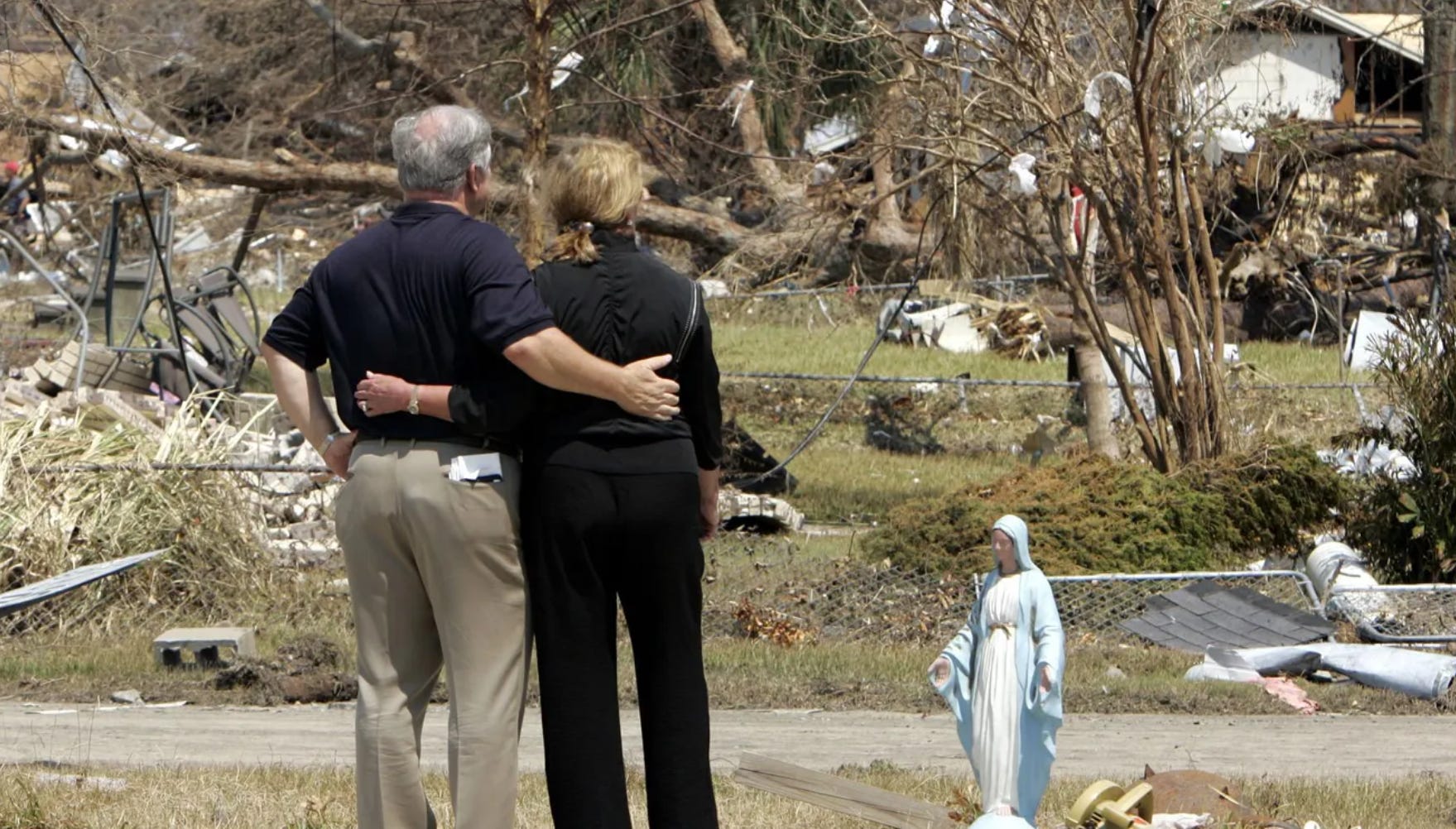
Three years later, Barbour was elected Governor of Mississippi, and hopes of a new day abounded. Months after Barbour took office, the unbelievable happened again. God himself smote Mississippi and Louisiana.
I don’t think we did anything wrong. Television preachers said it was because they had homosexuals in New Orleans, what about Ocean Springs and Pascagoula, though? Both Barbour and Bush turned their noses up at that kind of notion.
Bush was dragged mercilessly for flying over Evangeline while people were dying on their roofs waiting for rescue. I felt a very real sense of pity for him. Needing to be Superman and actually being Superman are two different things. You could actually tell his heart was breaking. Nobody ever gave him credit for that. Nobody cares when you’re not Superman.
Barbour put on his business face. He worked tirelessly, but he wasn’t Superman either. The tools we had to deal with this were woefully inadequate. It was months before people stopped dying. Once they stopped dying, there was a sort of limbo state where the poorest of the poor in Evangeline were living in hotels in Jackson and Houston. They were blamed for the rise of crime in both places. They might have been to blame. Surviving what they did, a faith in society’s rules might have been lost?
I was suffering a sort of cognitive dissonance where parts of my mind wouldn’t let me fully conceive of the human tragedy to protect my own heart and sanity. Instead, I focused on the fate of the Live Oak Trees.
Live Oak Trees were a defining aspect of the Mississippi Gulf Coast. As strong and ancient as they were, Katrina stripped them of their limbs and snapped off their crowns. The monarchs of the Mississippi coast were laid dead in the ground, their stumps a testament to what once was.
Chainsaw artists began carving the stumps of the dead trees. Art rises from the ashes.
Mississippi Camelot didn’t just end. It ushered in God’s own wrath in the form of a killer storm. Our president and our governor struggled to respond, but what can men do against such unbridled hate? Their performance will forever be judged unkindly—but not by me. I’m very familiar with the experience of needing to be Superman, but not being Superman.