Letters To The Editor

When the internet gets particularly evil, I think of my Uncle Tom, not because he was wicked, but because he was wise.
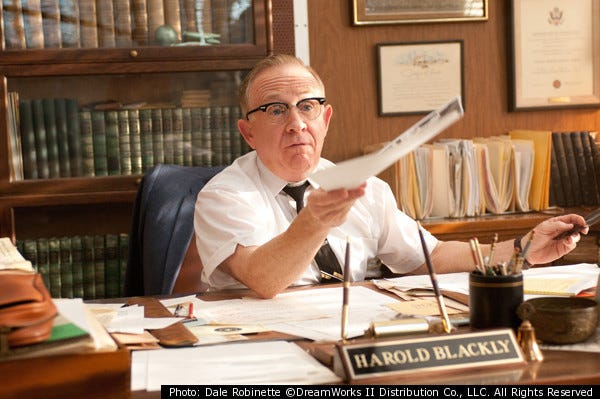
Tom ran the Clarion Ledger and the Jackson Daily News during one of Mississippi’s most notorious periods. In the movie “The Help,” he was played by Leslie Jordan. I think he would have gotten a kick out of it. His wife, my grandmother’s younger sister, would not. Had she seen it after his death, she would have called a lawyer.
Younger than my sister, I don’t think Kathryn Stockett ever knew Uncle Tom, although I’m sure she heard of him. Her grandfather, a legendary character as large as Tom, certainly did. For about a year, her grandfather would call every so often to see if I had changed my mind about boarding a horse he knew I didn’t have. I don’t think he was in cognitive decline, no more than I was at twenty anyhow, but I think he was lonely for somebody who knew his dead friends. That’s Mississippi.
When Tom took over from his father, it was the best of times and the worst of times for Mississippi. Economically, after the war, we were doing better than we ever had, even before the Civil War. Jackson, in particular, shared in the largess. It was a truly democratic economic movement, too. Working-class people saw their spending power climb more than anybody, and tracts after tracts of beautiful working-class homes sprang up in Jackson, most of them were financed with a mortgage from a company that became called “Unifirst” in a time when residential mortgages were a protected class of banking.
Thanks to the economic policies of men like Franklin Roosevelt and Huey Long, Mississippi had been experiencing a slow climb from the bottom since the depression. My grandfather used to joke that “The depression hit Mississippi, and we were so poor, nobody noticed.” Things started going up after that, though.
Long and Roosevelt both hinted at wanting cultural changes in the South. Long might have even been popular enough to do it, but resistance was fierce, and there was war coming.
During the war, Roosevelt approved massively expanded roles for African Soldiers. There were some terrible secrets, like the Tuskegee experiments, but, by and large, it ushered in a new conceptualization for brown and black Americans, and after the war, America had different ideas about what was happening in the South.
After the war, the first Republican president in a while piloted the cracking of Southern segregated schools following the Brown v Board of Education ruling. The South was on fire. He sent soldiers to protect a little girl whom white men wanted to kill.
Kennedy was elected, then Johnson. Their ideas on race and the South split the democratic party in half. Those who wanted segregation to remain were attracted by Goldwater and Nixon and became Republicans. As you can imagine, Mississippi was in an uproar. People died for just these reasons.
One Christmas, my cousins, who had been living out west for twenty-five years, came home to Jackson. They ended up out West because one night, their father, who was probably the smartest man in the family, an MD and a top Scholar at Millsaps College, caught a man in a gold coast speakeasy, talking about his dead momma, so he shot him. Didn’t kill him. That would have made things easier.
A man with the federal government offered to reduce his sentence if he agreed to be the doctor for some Indian Reservations out West, and that’s how they ended up in New Mexico.
Uncle Levi’s mother-in-law was convinced somebody gave him bathtub gin, and that’s why he done it. You know what bathtub gin does to a man.
In truth, the Rankin County gold coast, across the Pearl River from downtown Jackson, had just about any spirit you could find in New Orleans, which had a more reasonable alcohol law. That’s because that’s where their stock came from. Louisiana bootleggers were making a fortune off Mississippi speakeasies.
There were a few places in Jackson where you could get a snort, Brent’s drugs had a room where you could get something for a cold, but most folks just drove the fancy new bridge over to Rankin County, where “sheriff” was more a title of respect, not an actual job.
You could sell liquor in Mississippi without too much danger, so long as you paid your alcohol tax. That sounds insane, but it’s true. Before he became Mississippi’s principal advocate for education and culture, William Winter ran for Tax Collector, promising to abolish prohibition in Mississippi and let the cities and counties decide.
Now, whether he actually accomplished this is a matter of some debate. A debate I can’t honestly answer. Some say William Winter, Warren Hood, Jim Campbell (one and two), and Rowan Taylor orchestrated an event at the old Jackson Country Club that culminated with the governor of Mississippi signing a new alcohol act, despite an alleged one million dollar offer from Louisiana bootleggers not to.
My entire life, whenever I asked about this, I got a “go ask your mother look,” and a pretty stern one. When I did ask my mother, she said, “You know, I don’t have an opinion on such things.” Calvin Wells wrote a letter to the editor at the Clarion Ledger saying how spotless a character Warren Hood and William Winter had. That always made me kind of suspicious.
Whatever the true story (one we’ll probably never know), the result was that you could drink whatever the hell you wanted in Jackson, and most of the players in this story did. Nobody got shot, though. Not yet.
That Christmas, one of Levi’s progeny asked Uncle Tom why he published such hateful letters to the editor in his paper. Apparantly, they still had a subscription mailed to them.
“You should see the ones we don’t print.” Said Tom.
I don’t doubt for a second he meant it. Morbidly curious, I said, “ya know, I’d kind of like to see the ones you don’t print.”
Truth be told, I kind of love drama. At sixteen, I made no attempt to hide it.
“No, you don’t want to be like that,” Tom said. I think he was right.
The world will always be full of hateful people. I can’t fight them all. Poking them with sticks is probably the attention they were hoping for.
Things in my family could get kinda weird. There was usually a considerable amount of love involved, though, and sometimes some wisdom.