My Ghost Life

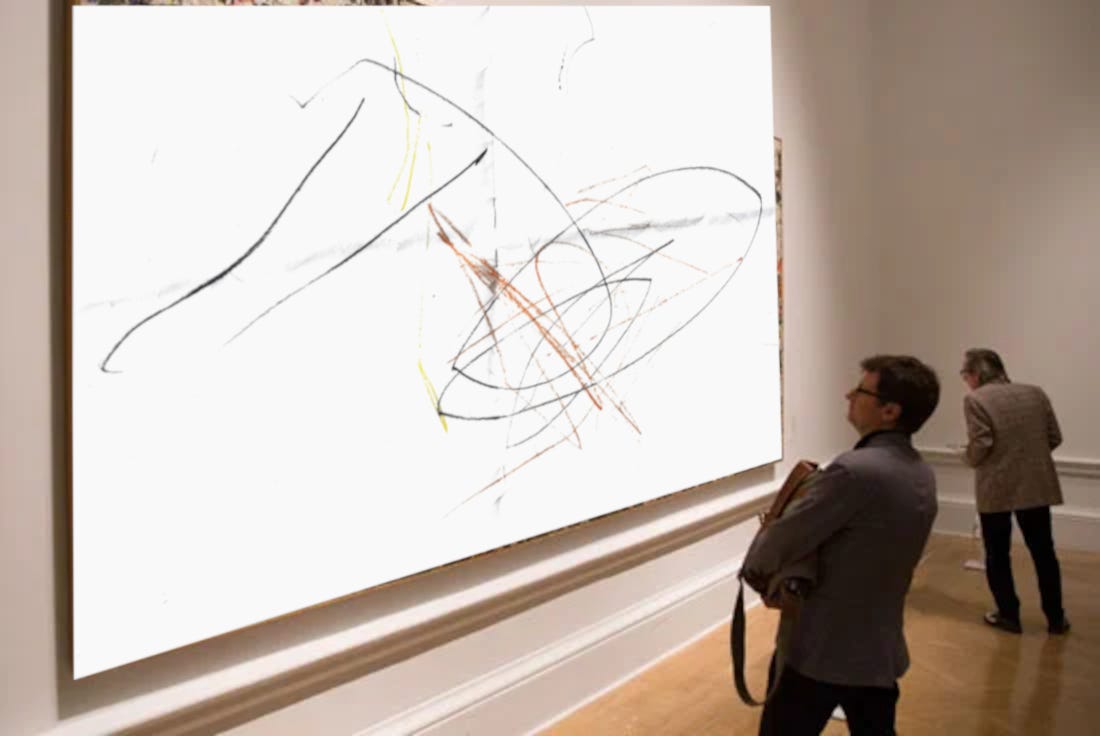
They’re gonna have to bury me with the painting that little boy made me. It wasn’t even on art paper. He just got holdt’ of some copy paper. It’s more valuable than the entire repertoire of Rothko or Jackson Pollock, and he made it for me.
For Brother Parker’s funeral, I chose a spot where I could keep an eye on his bride, his child, and his grandchild. My hold on the universe was questionable. When I saw Janie’s tousled brown head and azure eyes coming to sit with me, I figured I’d be ok. Not all my childhood friends were aware of my ghost, but she was. She always was.
My entire life, well, until recently, I suppose, I’ve been followed, shadowed by a ghost of irregular friendship. Both encouraging me and taunting me. Saving me and destroying me. Hope and hopelessness, its shadow crossed my soul pretty much every moment.
My ghost was the life I was born to lead, the life God made me for, that I was afraid to lead. The life I surrendered so I could be safe and do what I thought everyone expected of me. The life I didn’t think I deserved. Exploiting the gifts I thought I might possibly have, but was far too broken to ever exploit, it was far more me than I ever was.
Go to sleep, child. You make me stronger than I was. Sometimes she thinks I pour on stupid compliments to give her confidence. She forgets that I have a vow of honesty and truth with her. I am stronger than I was, even though I thought I was the strongest there was.
Waiting for the loving throng to disperse, Pat Taylor waited for his child bride.
“When you were my student, however many years ago, if anybody told me you’d be what you are now, I’d say they were out of their mind.”
It’s true, I was a meathead. I’d show up at Pat’s economics class, sweaty from the gym, muscles pumped full of blood, my mind dealing with the post-workout deep depression I always had. It only lasts about half an hour, but man o’ man. That half hour pushes the boundary between this world and hell.
Seated in the top row, hoping nobody could see me, I pulled off my sweatshirt to put on a clean t-shirt, briefly revealing the sweaty, torn wife-beater undershirt, most of the bottom hem ripped out.
“You ok, Brother Campbell?” Dr. Taylor said.
“Oh yeah, just ignore me,” I say. One of my friends whistles at the show. She’s making fun of me. I kissed her once. It was like kissing a tree. The sight of the Great Beast in his undershirt was not causing her to whistle; making me blush was her only motivation, and then she laughed.
I don’t blame anyone for what happened. Not even me. Children with communication problems often struggle with confidence, and I had every single communication problem. For most of my life, I secretly thought I was sub-human, and only deserving of sub-human things. I could write, and did write, my journal entries are around eight hundred to a thousand words long, but it only counts as communication when you let anyone read them, and I would have let you pierce my flesh before I let anyone read what I wrote.
There are levels of communication beyond communication. Janie’s eyes dance, telling me about her daughters. They say I have a thousand daughters; I suppose that’s two more. I keep a mental inventory of the boys who broke their beam trying to reach her shore, including the one who finally landed safely.
I suppose the first step was letting anyone read what I wrote, so I wrote a story about why I wasn’t dead and how I lost two hundred pounds, but don’t you try it—you’ll die.
Barely able to move, typing from a bed with a raised back, gentle readers began to form; some were ancient friends who recognized something they hadn’t seen in a long time. Some who never knew me before. Some who wondered how long it’d be before I finally revealed my true self, the self I never let anybody see.
I got an email from Brad Chism saying Hugh Parker died. Wait.
What? Um, I love you, but can somebody verify this? I literally just talked to Hugh. None of it made sense until they told me he died on the water. Of course, the sailor always returns to the sea. Dying on the water is the fish’s revenge, and a beautiful death.
Assemble the knights. Bring the piper. There’s a funeral, boys. We oughtn’ do this proper.
I wake up at five every morning. I started doing it so I could know my missing Daddy. Now I do it, because I don’t have a choice. The patterns of Daddy’s life became the patterns of mine. I shave everything from the collarbone up, except for a patch on the chin. It’s a bit cruel how thick the hair grows there.
The night before, I laid out a purple-and-black suit. I’m becoming known for wearing scarves. It’s not a fashion statement. Touching something soft, like cashmere, wool, or silk, stimulates my brain just enough to engage my ADHD, so I can focus on the issue at hand. It’s called “Stimming,” and it’s very common with autistic children. Technically, I’m not on the spectrum, but I bet if they did a recount, I might be. The president keeps saying he aced tests for dementia. I could not ace a test for autism. I was even mute for a while—but it was because I stuttered and I’m stubborn as hell.
In the cab, I realize I forgot my pills. Damnit, Boyd. “Good mornin! You a preacher, Mr. Campbell?” The driver says.
“Call me Boyd. I’m a poor student going to a funeral. Where are you from? I don’t recognize your accent. Oh, I hear that’s a beautiful place. I heard about the war. I’m glad you’re here.”
A few times a day, I tell people not to call me “Mr. Campbell.” The great Southern Tradition of showing older white men deference is bullshit. I’m just Boyd.
Galloway is a very ancient church, filled with every contemporary thing, including a day care. I stop at the room where they keep the four-year-olds. They ask about my leg.
“You fell off a ladder? But Why?”
If you give children honesty and respect, they will give you honesty and respect in return, and then they’ll climb all over you like resus monkeys when they realize the Great Beast is a gentle one. I keep sugar-free Jolly-Ranchers in my backpack in case I get a cough. There isn’t enough. I hand out my business cards to a small army of four-year-olds instead. They receive it like a treasure. “Oh! Can I put it in my cubby?” They ask teacher.
“What else is in your bag?”
“Well, let’s see. These are my keys. These are my glasses.”
”Why you wear glasses?”
“Because I’m old.”
“Ohh, is that why you beard is white and you got no hair?” That child might be president one day.
A little boy grabs a piece of paper and runs to the desk, scribbling furiously.
“I made this for you! I’m an artist too!” I have a new treasure. It’s just scribbles, but it’s important art.
I’ve spent a great deal of time trying to explain why the work of Rothko and Pollock was actually art, but more than that, why their work was important art that changed how we saw art. A lot of people think I’m a pretentious asshole, only pretending to understand. Maybe I am, but I’m legitimately trying. When I was nineteen, Lance Goss said, “If you struggle to understand great art, the problem isn’t in the art, it’s in you.” There’s a whole lot of problems in me, Brother Goss.
My purpose wasn’t to impress children or flash my cashmere-purple scarf at the ladies. I came looking for two ladies in particular. I go up a floor so I can greet them as they come in. Hugh had a fine, strong son, but Boyd has a thousand daughters. I came for his daughter, and his child-bride, also my daughter.
One of the great inequities of life is that women always end up alone. A strong man acts like nothing can hurt him, and he defeats many foes, but he dies first, his bride is full of love still, but sleeps in an empty bed, sometimes for decades, in an empty bed. I spent my life trying to discover how best to serve woman. I’ve botched it in every possible way. What happened then, and forever, between the Poor Knight, Cynthia, and Mary Helen is not a secret thing, but a private thing. We all wept. I’ll watch over them, Brother Hugh, as best I can, as long as I can. It is my vow, and my debt to an old friend.
I hear that a woman fell coming into the church. The Poor Knight has a sixth sense about these things. A cluster of women circles around her. Her ankle is hurt. I tell them to put ice under and on top of it. A young woman, Little Bird’s age, wears these chunky boots. “My Godchild would kill for those,” I told her. To me, she is a child, but she looks like less of a child than she did when I wrote a firmly worded letter to the Bishop on her behalf, reminding her that, though she is a Bishop and I am an agnostic, I’m pretty sure I’m closer to the intention of the Lord than she is on this matter. A descendant of Hebron Morris’s antecedent, I recognize her when her mother tells me who she is, and the scales fall from my eyes. Of course, she is.
Blair Bingham is older than me, but just barely. He married one of the designers from Missco, who I knew was a little older than me, but not much. I had carnal knowledge of one of her co-workers who was eleven years older than me and insisted that I give it a go. You don’t need to know all that.
Blair was a good man and a good student, but his career was cursed to be caught up in every fucked up thing that happened in Mississippi business. First, pirates come to town to plunder the Deposit Guarantee Bank. They promised Elsie Hood to take care of her people, and those pirates were actually honorable, but the pirates who stole everything from those pirates were not. Such is the life of pirates. Then he got hooked up in the company formed when John Palmer’s amazing success merged with some other pirates, including a pirate who went to Southern Miss and was associated with Mississippi College, and was a lying son of a bitch. Don’t get me started.
Bingham would remember his life with Hugh Parker in front of Hugh’s bride and children. That’s pretty appropriate.
Sometimes you hear the term “Captains of industry.” I don’t even know what it means anymore. They used it a lot to describe my family. They even used it to describe me for a while, but only a short while. That’s the life I was leading, so I wouldn’t lead my ghost life. The safe life, the life I thought Mississippi wanted. Hugh was involved in several important businesses in Jackson, besides his work at Millsaps. He helped start one of the most important accountancy firms, among other things. The Captains of industry were there in full force.
One day, my uncle and namesake announced that he and his friend, Mr. Kennington, were putting together Mississippi’s first symphony orchestra. That seemed unlikely. Boyd had a way with these things, though. He also arranged for the first two performances in Jackson for a young singer named Leontyne Price. It was a trick because a “colored” woman on a “White” stage broke every rule, but Campbells don’t much care for rules.
Crafton Beck doesn’t recognize me. Why should he? I removed myself from civic life for more than twenty years. My fake life was killing me, and my ghost life was about to be born. He wears a brace on his leg, befitting an Ironman, and complains about his joints.
The night before, I made a video for a special friend. It’s just me listening to Pavarotti singing “Che gelida manina” From La Boheme. This is somebody I’m desperate to make believe I’m living my ghost life now, and the old life is in ashes. I am a new man with an old man’s history.
“How cold your little hand is! Let me warm it for you. What’s the use of searching? We’ll never find it in the dark. But luckily there’s a moon.
I’ll tell you in a word who and what I am. Shall I?
Who am I? I’m a poet. My business? Writing.
How do I live? I live. In my happy poverty
I squander like a prince my poems and songs of love. In hopes and dreams and castles in the air, I’m a millionaire in spirit. But sometimes my strong box is robbed of all its jewels by two thieves: a pair of dark eyes. They came in now with you and all my lovely dreams, my dreams of the past, were soon stolen away.”
There are things I think and things I believe that can only be expressed in music and paint.
Daddy’s best friend married a little Yankee woman who came to Mississippi to study Eudora Welty but ended up part of her inner circle. Never a caretaker, though. Even toward the end, Eudora Welty was too strong for that. She sat in front of my grandparents in church, but behind Lance Goss. “Oh, she writes, you know.” My Bubba tells me.
“What’s that?”
She was a little old white head before I knew she was a genius.
I make a beeline for Suzanne in the receiving line. She holds me tight. “I need to send you my book. About four chapters are on Rowan.” Her eyes light up. For an old white dude, Daddy had a crew; they were very faithful. He was writing them when his great heart stopped.
I have a regular place in church. Behind a short pew, in one of the corners. I chose it so nobody could see me, but I’m an idiot; the door is right there. EVERYBODY can see me.
Janie doesn’t even say anything; she just sits down near me. “Hey, you.” I smile and say.
I’ve started to do this thing in church, where I don’t look up. I’m a terribly imperfect Christian, technically an agnostic, but I’m trying. I really am trying. God should be a part of my Ghost life. I’m trying to live with the gifts he gave me, the actual life he intended for me, finally seeing the light after sixty years.
Maybe that’s why I can’t look up. Maybe I feel guilty for squandering my actual birthright trying to live up to the birthright I thought I had.
Our choir is three times its normal size. Hugh had a lot of friends. The balcony begins to fill. I recognize the faces of Millsaps professors. Our sanctuary has the acoustics of a ram’s horn. The music Brother Howard picks rattles my bones, but then I find out Hugh picked most of it. Of course, he did.
In the reception area, near where they laid out the Methodist Coffee, they made a display of photographs of Hugh’s life. One has him sailing. Noticing the wrinkles in the sail, I admonish his photographic countenance for not trimming that sail. You’re not going anywhere with a lax sail, my friend.
Both Sheltons speak. I smile at Connie. I’m pretty sure there should be a song about a bishop wearing Revlon red shoes. Some of the most remarkable Christians I have ever known were women wearing red shoes, and now, chunky boots, I suppose, are added to the list.
Sometimes, if you’re a very stubborn boy, you have to lose your life to find your life. It happened to me. In the cave, I survived daily suicidal ideation, while the winds of the world tore the flesh from my body, leaving only the steel underneath.
I’ve learned that my cave wasn’t a tomb, it was a cocoon. Sometimes life does that, you decide to die, but you end up with beautiful, richly colored wings instead.
A storm passes over. The light through the stained glass windows dims, the light volume in the room drops twenty degrees, but the color temperature warms twenty degrees. I’m so incredibly sensitive to these things. It’s why I enjoy lighting design so much. Blair’s child sings. Blair speaks. Raigan delivers a powerful message. She’s wearing a shocking red blazer under her liturgical robes. I’m telling you--Raven Girls, in blazing red, carrying the word of Christ is a thing.
I can’t tell you the precise moment that my ghost life became my real life. I’m pretty sure it was at night, in the dark, with most of the world asleep, surveying my city like a twisted and broken Batman. This is me. I am better than I ever imagined I’d be.