On Being Wounded
the fox in the rabbit trap

If a fox gets caught in a rabbit snare, it will fight you to the death rather than let you help it. Even if it senses you’re trying to help, you have to restrain it to get it out of the trap, and then jump back once it’s free. The fox doesn’t want you to see it wounded, even though you saved it.
I’ve told you the story about how I broke my arm, and J.O. Manning said my daddy couldn’t practice medicine anymore. That’s a true story and one of my favorites, but it’s not the whole story, though.
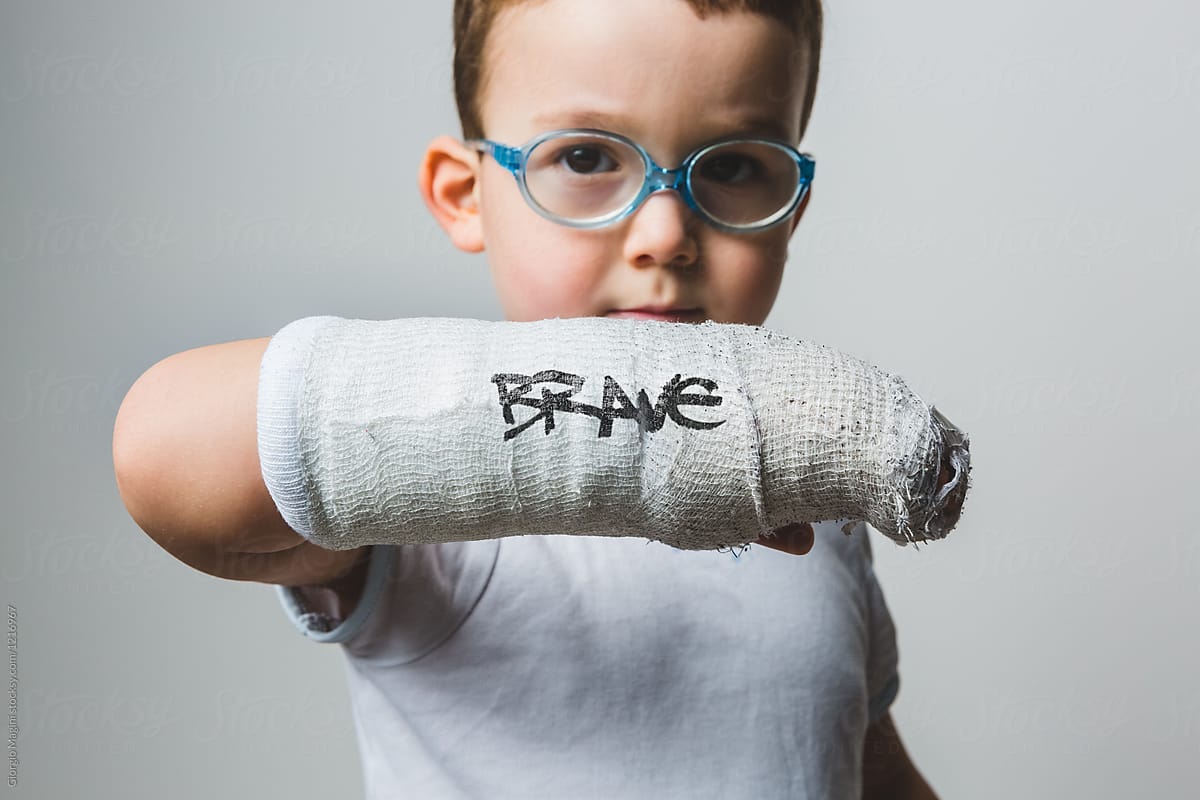
Going out into the world with a little cast on my little, but rapidly growing arm, people were so nice to me. Friends, other students, teachers, Sunday school kids, my family, my family’s friends, the bus driver, the man who cut the roast beef at the Capitol City Club, everybody was so nice to me. They signed my cast. They held open doors for me. They carried my books. Several times a day, somebody would say, “Does it hurt? Do you need to rest?”
Since we were children, my friend Angel knew I would break mountains into gravel for her. If anybody ever asked, she’d just say, “Oh, that’s Boyd.”
She’s always hated the idea of my ever seeing her wounded. We’re grown folks now, and grown folks sometimes get pretty deep wounds, but she wouldn’t let me see it to save her life. There’s more to that story, but I would only ever tell it to her child.
I’m pretty sure I was born to be her vassal and Knight Protector. Her family seemed to think so. I would create entire new worlds out of dust for her, but she’d never let me. She’d rather be wounded.
A student once asked Margaret Mead what the first sign of human civilization she ever saw was. Mead said that she found a hominid skeleton with a broken femur. When the student questioned it, Mead noted that the femur had healed. The only way for that to happen was if the rest of his troop or tribe protected and cared for him while he had a broken leg. This, Mead said, was the first sign of human civilization.
I was born with some pretty significant wounds. I couldn’t speak normally. I couldn’t read. Unlike my brother, when he got older, I didn’t hear voices; I heard EVERY voice. They crowded my brain and made my head hurt. A lot of people tried to help me. They were kind and genuine. My response, even as a tiny boy, was “GO THE FUCK AWAY!” I’d rather be wounded than let anyone help. I learned to hide. I hid quite a lot.
One place I hid was Martha Hammond’s house. Hammond, as I called her, was different. I would talk with her. She was patient as I tried to form my words. I don’t know, man, maybe she was magic. She saw things in me nobody else could. Though I couldn’t read, she gave me books. Hammond was the first person ever to say, “Boyd is a writer.” My Aunt Jo said, “That’s so sweet.” I think she meant, “that’s so sweet, but impossible.”
At Casey Elementary School, the other kids knew their letters. They could write their names. They could read little books. “This is Jane. This is Dick.” God only knows how much money Daddy made selling Scott Foresman Readers.
I couldn’t do any of those things.
The teacher said, “If you have to go to the bathroom, raise your hand, stand up, and say, ‘Please, may I go to the toilet? ‘ And I will let you go.” I didn’t like drawing attention to myself. I didn’t like talking in front of people. My stutter was getting better, but when I got nervous, nothing would come out.
Still, little boys have little bladders. I got pretty good at holding it until we went home. There’s only so much a fella can do. As the urge came upon me, I realized I’d have to do something. “I’m wearing dark pants. Nobody will notice.” So, I let go. The teacher did notice. She especially noticed the puddle under my chair.
She couldn’t have been more than twenty-four. She looked like the lady who played “That Girl” on TV. Every third brunette had that hairstyle in 1969. “Come with me,” she said, without referencing the fact that I peed myself. She took me to the office, and they let me sit in the sick room.
I wish I could remember the name of the woman who was the principal at Casey. She was a pretty big deal in Educational Circles. She was a friend of my Grandfather and Uncle Boyd. She sat with me in the sick room. “I called your momma. I brought some towels. Clean yourself up in the sink.”
By this time, my face was red with tears, but I made not a sound. “These things happen, little man. Don’t be embarrassed. We won’t tell anybody what happened.”
I’m pretty sure the other kids noticed the pool of Boyd pee on the floor, but nobody ever said anything. When my momma came, we walked by the classroom. I could see a man with a mop, cleaning my seat and the floor under it.
Through this whole incident, not a living soul said an unkind thing. I was not scolded or told I was bad. I did, however, want very much to die.
Why they moved me from Casey to St. Andrews is complicated and the subject of several other stories. At St. Andrew’s, I met Angel’s mom. I planned to be as stand-offish as I was at Casey. Maybe even more, even though my mom and her friends had been talking about the steak fingers and green beans all summer.
The steak fingers were breaded and fried hamburger. The green beans were Del Monte canned green beans with onions, salt, and pepper. It’s amazing what you could build up in a child’s mind. We’d get so excited when green beans were on the school lunch menu.
Angel’s mom had been studying different things about educational theory. Not being able to read was a gigantic wound in my life, and it would only get bigger as I got older. Without a way to fix that, I was doomed. They’d have to pull me out of St. Andrews and send me to a special school.
In my efforts to read, Angel’s mom thought she recognized something. She told my mom to take me to see Dr. Weir Conner. Dr. Conner was a Millsaps kid. We would eventually be fraternity brothers. He sent me to a lady at UMMC for testing and then again for training.
Knowing what was wrong with me, my mother, working with the specialists, developed strategies to teach me to read. That doesn’t mean it was easy. Read my essay “Educating The Retarded Child” for more on that. With a plan in place, Angel’s mom sent me back to the second grade, where I met, well, Angel, and a bunch of other kids who became my lifelong friends.
As much as I talk about me protecting people, those kids always protected me, big as I was. Angel, in particular, was always one to try to protect me, even if it was protecting me from myself.
I fought everybody who tried to help me, and yet they kept trying, like the fox in the rabbit trap. Because they didn’t give up on me, even though I wanted to make them give up, I now read. I read, and I write. Some people say I’m good. I dunno ‘bout all that.
When I turned thirteen, some amazing things happened. There were moments when I was incredibly happy. Combined with that, though, I was introduced to loss that couldn’t be regained. In a few months, I’d be introduced to death. I was caught in the rabbit trap again. Thirteen, fourteen, fifteen, sixteen (especially) wound after wound built up on my body and scarred my soul.
I responded by trying to make my body as strong as I possibly could. While I won some cool ribbons, it didn’t fix anything. Because I let no one help me or even talk about it, I could feel pieces of my spirit breaking away. Every day, I could feel another piece break away. “You’ve just got to be stronger,” I told myself, which was stupid because, as my spirit broke, my body weakened. It’s hard to work out with full force when you’re losing your mind and your soul.
Let’s move forward forty years. I called my sister and said, “I know you’re mad at me for disappearing, but I don’t want to die.”
If a fox is caught in a rabbit trap long enough, they’ll get so weak they can’t fight back. You hear stories about how a fox will chew its leg off if it’s caught in a trap, but that’s actually very rare. Usually, they just fight as long as they can, then they lose their strength, and then they die.
I didn’t want to die, though. I called for help, and help found me.
“Yayyyy, Boyd is teaching me a lesson!” Actually, I am. A parable, I suppose—examples from my life about why you don’t want to be like me. After the attack on September 11, Fred Rogers went on television to make a special program to help the world’s children through that defining moment in history. On it, he said:
“When I was a boy, and I would see scary things in the news, my mother would say to me, ‘Look for the helpers. “ You will always find people who are helping.”