Refusing the Lord's Table
rebuilding my faith

Heading toward Easter, I’d like to write at least once a week about how I tore my Christian belief down to nothing and rebuilt it. This makes me a bit nervous. I hope you will receive it in the faith that it’s given.
Trying to impress a girl I just met (imagine that), I said that Scrooges was a “London pub.” Billy Neville said, “More like Oxford, but always marketed like London.” That you could have a conversation like that there is what brought me back over, and over, and over. Billy dressed me most of my life. When the time came, he asked me to help him pick from the clothes he sold Daddy to put him in the ground. By “help him,” I m pretty sure his aim was to distract Boyd, who wasn’t saying anything, but his eyes were constantly moving like a frightened yearling buck.
Big Mike had a beer and made a drawing. A tiny woman desperately wanted to be part of the conversation, but just couldn’t keep up. Pat was a proud, tall woman. She was the protégée of Parham Bridges, a name you really may only know if you’re from Jackson of a certain vintage. If you are, it says a lot. Skip was one of the smartest men I ever knew, despite being a member of the Mississippi Bar.
Discussing a mutual acquaintance who was having a difficult time, I said, “The world has handled her roughly.”
Pat said, “You too,” with a look of genuine concern.
This was a time in my life when it disturbed me when anyone ever thought anything other than “Boyd is far too strong to ever be hurt.” It took nearly dying to get over that. I wasn’t about to admit that the world sometimes handled me roughly.
“I have a different deal with God,” I said. “A fair sailor knows he cannot choose the seas. He can only adjust the rudder and trim the sails according to what winds the Lord sends. If God himself wants to fight, I’ll fight. Who cares if I don’t win?”
“Whatever you say, Jacob,” Skip said. Despite being older than me, Skip always stole my girls. He also took every moment to teach me. This was such a moment.
I used to sneak legitimate art classes to shore up my struggling GPA. God himself blessed me with some skills, Finance 204 and Statistics 102 not among them.
In writing, drawing, painting, and theatre, a classical education means you break the thing down into its constituent parts, and keep breaking it down until you reach a blank page, a clean canvas, a bare stage, tabula rasa, a new idea. Then you are taught about line, contour, value, hue, character, stage directions, plot, metaphor, verbs, nouns, and you recreate the thing from nothing. Originally, they said, “This is how God created the universe. He started with nothing.”
There was a time when I was deeply agnostic, and I suffered for it. By suffering, I mean I punished myself as I wrestled with God, the concept of gods, faith, works, prayer, men, and love. Fight me! I NEED you to fight me!
I received a complete and loving religious education and childhood. Ministers of every type, and more nuns than you might imagine, were family friends, and broke the bread that Jane Lewis baked, and my mother served.
My first minister was Bishop Clay Lee. He was at Galloway Memorial United Methodist Church for something like a million years. Maybe a million and six. Daddy preferred the morning service. He preferred sitting in the balcony where only Clay Lee, Mary Taylor Sigmon, the organist, and God himself even knew the Campbells even went to church. Leaving the church, he became Jim Campbell again, shaking hands and discussing business, but during the service itself, all six of us were hidden from the sight of men.
“Boyd, go get the car for your grandmother.” Truth is, I was getting the car for BOTH Bubba and Granddaddy, but couched in the terms of “get the car for your grandmother” sounded more gentlemanly.
Most people don’t examine and certainly never dissect their faith. I will not judge them. Your faith is your business. Just don’t use it as a weapon against others.
Scrubbing the thing down to tabula rasa, one of the first things I saw is that there are different aspects of religion. One of the most important is culture. We use religion to define who we are. Religion has served this purpose since the very beginnings of mankind, while painting horses and prey on the walls of caves in France. We tell our children, you are Muslim, you are Christian, you are a Jew, you are a Hindu. It helps them define themselves.
This is obviously very important, but it doesn’t have to be real. In “God is not Great,” Christopher Hitchens pointed out that there are thousands and thousands of ancient gods we now dismiss as “myth,” so why not dismiss this one too?” If I were going to travel through hell to rebuild my religion, I quickly recognized that I’d have to face Hitchens, both as my guide and the final boss battle.
Because life is horrible, some people use religion as a crutch. I can’t critisize them. Some people use religion to advance their careers. I can’t critisize that either. You’d be amazed by what terrible things people will do to advance their careers. Going to church is at least productive when they help feed the poor and stuff—even if you don’t believe in it, in your heart.
“If you’re going to do this, Boyd. You have to do it with complete legitimacy. You have to emerge on the other side able to say you burned the thing down to its core, and this is what you found.” I set difficult rules for myself.
One of the first things I did was to say, “If none of it is Metaphor, if all of it is real, what then? Do you still believe?”
As a Christian, I started with that. The core tenet of Christianity is that “for God so loved the world that he gave his only begotten son.” In this sense, “beget” means both to create and to father.
The Gospel according to John wasn’t written in English, Hebrew, or Aramaic. It was written in Greek. In Greek, the oldest versions we have say, “Οὕτως γὰρ ἠγάπησεν ὁ θεὸς τὸν κόσμον, ὥστε τὸν υἱὸν τὸν μονογενῆ ἔδωκεν, ἵνα πᾶς ὁ πιστεύων εἰς αὐτὸν μὴ ἀπόληται ἀλλ’ ἔχῃ ζωὴν αἰώνιον.” I don’t expect you to read this. I can’t read it without a Greek translation text myself. Words matter, though.
Begotten Son is something I know about. I am a begotten son. Every boy I know is a begotten son. Every human I have ever known was a begotten child. God loves us so much that he offered his own child as a sacrifice, not to himself, but to us.
So.
The question then became, “Am I worthy?” “Is Boyd worthy of the life of someone’s only child?” I know a lot of only children, both as friends and the children of friends. Would I be worthy of somebody putting them on a cross for me?
Aristotle described the climax of pity and fear as “catharsis.” I’d studied the word a thousand times. NO, no. no. no. in no sense, in no shape, in no form, is my life worth that of a child. I tell the Little Bird all the time that I would die for her and her mother, and I would. If this is what Christianity means, I CANNOT be a christian.
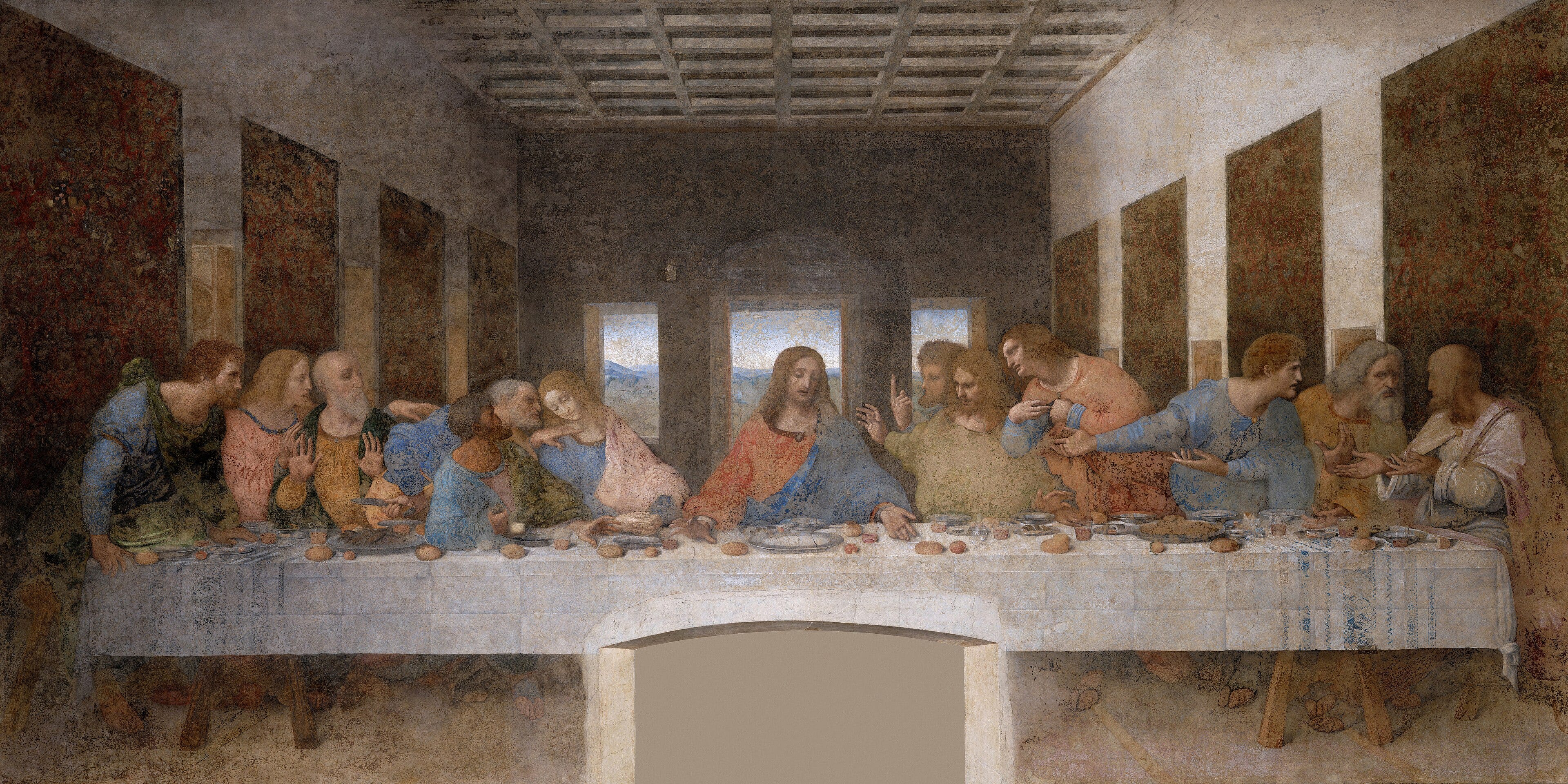
In Christianity, we use ritual as a metaphor for the words in the bible. We pour water over babies to wash away their sins. We kiss the bride in front of everyone to consummate the wedding. The most important is the lord’s table, the Eucharist.
“This is the blood of our Lord, shed for you.”
”This is the body of Christ, broken for you.”
Catholics believe that the wafer and the wine actually turn into blood and bone in your mouth. Methodists believe it’s just a metaphor, but I’ve never drawn a distinction. They’re both ritual cannibalism. We don’t discuss it much, but cannibalism is an ancient part of many religions. Later in John, Jesus says, “I am the bread of life.” What is it we do with bread?
If I’m to be a legitimate Christian, I have to accept metaphor as “real,” but it doesn’t matter; I’m not worthy of either. Boyd, as a man, this man before you, is not worthy of anyone’s life, especially not Christ.
I began to suffer. For most of my life, I believed it was important that the world believed I never suffered. My thinking was simply this: “Boyd is so big. So, so big. If this hurts him, what hope do we have?” As a result, I pretended like nothing hurt. “Hit me in the face again!”
Suffering of the soul is an enormously lonely and isolated thing. It embarrassed my wife so much. “This is the church I grew up in. Do you have any idea how it looks if YOU DON’T take communion?” We often had trouble communicating. It was my fault.
I wasn’t refusing the eucharist to be willful or show off. The idea of it burned me. Burned the skin right off me. Do NOT die for me. I am nothing. I was always nothing. I will always be nothing. DO NOT DO THIS!
I gave up my church for her church. It was never a question. I’m not sure why. I think I was so worried about shaking her sense of self-worth that I ignored my own quite a bit. At her church were a priest I had known all my life, David Elliot, and a brilliant priest I had just met, Minka Sprague.
I can remember when women weren’t allowed the pulpit. When I look at the church today, that was such a horrible idea. Most churches couldn’t survive without ordained women. Minka Shura Sprague spoke Greek fluently and wore red cowboy boots under her liturgical robes. David Elliot spoke Boyd fluently.
Their point was that you don’t have to feel worthy because it’s not up to you. God made you worthy. You don’t even have a choice, the blood was spilled, the body was broken for you, you honor both the God and the sacrifice by tasting it.
I celebrate the Eucharist now. Because my right leg still doesn’t cooperate, they’ll often bring it to me, but I’d crawl to take it if I had to. Eucharist is the central tenet of Christianity. I cannot be a christian without it.
There were still some struggles left in my journey to rebuild my faith, but I passed the lion at the gate because a woman in red cowboy boots spoke Greek.
One day, the Little Bird was having a rough time. Like me, she feels the entire universe. Like me, she can’t shut it out. She’s not my child, but somehow she inherited some of the best and the worst parts of me.
Little Bird worried that, returning to her home, she didn’t know where she fit in, where she belonged, or who she belonged with. “Child, my precious, wonderful child, would you like to go to church with me?” I asked.
She cried.
“Nobody ever asked me that before. Well, Momma, obviously, but nobody else. I would love to go to church with you.”
I’m not a very good evangelist, mainly owing to the fact that I’m not a terribly nice person, but I’ll go to church with you. Your church or mine, and I’ll take a seat at the Lord’s table when offered, although I’d rather not.