

Seeing Oleanna
my lost mothers day story

Life is a complicated concoction of moral imperatives, ambiguous implications, cultural norms, expectations, desires, hopes, abilities, shortcomings, lost dreams, and broken promises, none of which hold any answer to the question of what’s good for Boyd and what might mend his broken heart. My life was quite literally lost in the details.
One night, convinced I had finally discovered a strategy where my mother would have to admit I was right and she was wrong, I asked her why she never went to any of my theatre and art functions, with all the time she spent on my other three siblings, why was she never present at mine? Her answer was simple,
“You never invited me.”
Checkmate. In a moment, I realized that, in trying to get my mother to admit she loved me, I had instead written her out of my life, and by that time, it had been so for at least twenty years. I was wrong.
Although we never used that word, I was estranged from my mother for most of my life and the last third of hers. By “most of my life,” I’m including the time after her death when I still hadn’t come to grips with it. As she lay dying in the hospital, I held her hand and said goodbye, but didn’t forgive her
Forgive her for what?
At a sensitive moment in my life, I believed she chose one of my siblings’ well-being over my own. Forced to choose which of her children would live, Sophie chose not Boyd.
My brother had been my idol until he lost his mind, and even after that, I was overwhelmed with feelings of sympathy until one night, when one of the voices in his head decided that I had to die. No one knows why schizophrenia sometimes takes a violent turn, but it does. I suspect it has something to do with rampant feelings of paranoia, filtered through some sort of hormonal and brain chemical peak where the voices in your head seem real, the id, ego, and superego trade places like square dancers, and the result can be a terrible tragedy and would have been a terrible tragedy, except my brother’s knife was too dull to hurt me.
What would have ended with me in the ground and him in prison for life, instead ended with him in the hospital and me without a mother. In her concern for her sick child, she somehow couldn’t hear the voice of her other child, and that broke the indelible bond between mother and child. I was not chosen.
Sixteen at the time, I’ve spent my life finding women who would not choose me. The message she didn’t mean to send was that my well-being didn’t matter, a message I wouldn’t have consciously accepted, but for a child who refuses to have any feelings at all, it’s those things you won’t accept that force themselves into the front line.
“You have to understand. Your brother is sick.”
Of course, I understood that, but where did that leave me? Why was my well-being not considered? I get that, by this time, I was already so big and acting so inhuman that it was hard to understand that anything might hurt me, and I certainly made every effort to make everyone believe I was unhurtable—but was it true?
In my mind, my father was as guilty as my mother, but he did something she wouldn’t ever do. He said he was wrong. He was wrong for never being there when I was young, and he wanted to get to know me as a man, so, even though I was far too young to spend my time hanging out with fifty and sixty-year-old men, my father started taking me pretty much wherever he went. We didn’t know his years were numbered at that point, but maybe he did, but there did seem to be some rush for us to have experiences together.
Ultimately, it was my father who said: “You’re dying, aren’t you, Buddy?” For the first time in my life, I felt seen by anyone, and it was my father. Devising a plan where I could survive, we kept it a secret so as not to step on my sister’s storybook wedding, but now that they’re both gone, I realize that none of these plans ever involved my mother. Now that they’re both dead, I wonder if she even knew. Moving to Hollywood was supposed to save me, but did my mother know? Had I written her out of my life, even then?
I don’t like to feel. It means I can be hurt. It means I can be confused. It means, more than anything, I might not be chosen. The only way to not be hurt by not being chosen is to make it so you’re not eligible to be chosen, and for that, you have to not feel and not care. I didn’t invite my mother to any of my plays because I didn’t want to know if she would choose to go or not, by not asking her, I was leaving her with the chance to say “you didn’t invite me,” putting the whole thing back on my shoulders—as long as it was on my shoulders, I could control it. Of course, she didn’t go. I didn’t ask her to.
I tried to write this for Mother’s Day, but I couldn’t. Even though my mother isn’t here anymore, I’m trying to rebuild the bridge between us. I tore it down. I can rebuild it.
I’m at a stage in life where the children of people I love are an increasingly important part of my life. Everyone struggles with feelings about their mother. With so many of these children, including my niece and nephews, how much I love their mother completely changes how I see them as human beings. They become part of the bridge I’m trying to build between my absent mother and me.
In retrospect, what I see is a youth where one thing after another tried to break me. Exposed to death and loss, even madness, at such a young age, I developed a strange case of post-traumatic stress disorder, unusual among over-privileged, North East Jackson muckity-mucks, but was it really?
Born with a gentle heart, I became more and more rigid. I pretended I had no heart so that nobody could break it. I could, and would offer ten times more love than a normal person, but don’t even bother trying to return it because I won’t take it, even from my mother.
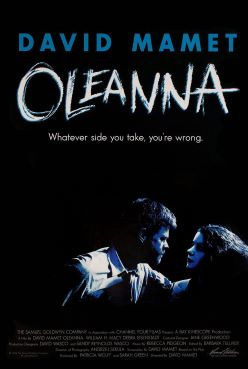
Although she did come when I directed “Oleanna,” my mother never attended any of my plays because I never told her when they were. That was my fault, not hers.
This is so sad to read, especially for a mother.