Surrender Orpheus

I was just fourteen when they told me Katie died. Forever after, the grownups apologized for not telling me sooner. Since Katie lived in another state and had already stopped taking my calls, I sometimes wondered if not telling me at all might have been an option. Only a few people know Katie’s real name. It’ll be that way until Katie and I meet again.
A stuttering child, I was already having trouble making social and emotional connections. The year before, my brother was committed for the first time. I wasn’t off to a very good start.
For years after, Doug Draper tried to get me to talk about it. I got pretty good at lying. At $150 an hour, I don’t really recommend lying to your psychologist, but you do you. Whatever he was trying to get at was deep inside me. It was cold and hurt, and the very last thing I wanted was for anyone to see it, or talk to it, or touch it. Just leave it be.
Doug was not just my psychologist. He was my friend. I feel bad about lying. I suppose he knows the truth now. Maybe he knows Katie.
I found that if people said they needed something from me, I could work through my barriers. That’s how I ended up with Monica.
On Thanksgiving Day, Monica’s dad locked two doors and put a gun to his head. Breaking down two doors was easy for me. Stopping the blood was not. I did try, though.
This time, Doug was pretty insistent that I talk about it. “I’m fine. Really. I did what I had to do.” Generally speaking, psychologists don’t force you to talk about things you don’t want to, but I could tell he was trying to sneak it in around the corners.
I did write about it, but that was a secret, even from Doug. I’d sometimes show him my sketchbook. Science Fiction themes and figure studies don’t usually betray that much, but he wanted to see.
In college, Bourbon and an illegal herb meant I showed someone some of my words. “Write for me.” She said. “I want to be your muse.” I already had a few people I considered a muse at that point, but I don’t mind accepting a challenge.
Reading what I wrote, she said, “So, what do you want to do about this?”
“Nothing,” I said. “They’re just words.”
We were friends, with a little extra. Despite how easily I could pour out emotion in words, I couldn’t in the real world. Still, she wanted more, so I wrote more.
We’re still friends. Sometimes she messages me on Facebook and says, “Why don’t you write the way you wrote for me?” She’ll say.
“That’s easy. These people have their pants on.” I’d write back. That generally gets a laugh. She’s four states away, and on husband number three, I think. He seems to be a nice guy. I hope he has supplementary insurance. She can be aggressive.
Out of college, I could and did find people who said they needed me in abundance. Some were in genuine trouble. Some would have been fine if I had never gotten involved. This wasn’t love, though. This was macho hero man saving the day. The idea of “I’ll make you strong, and you’ll make me strong.” Seemed alien to me. People talked about it. I wasn’t sure I believed it.
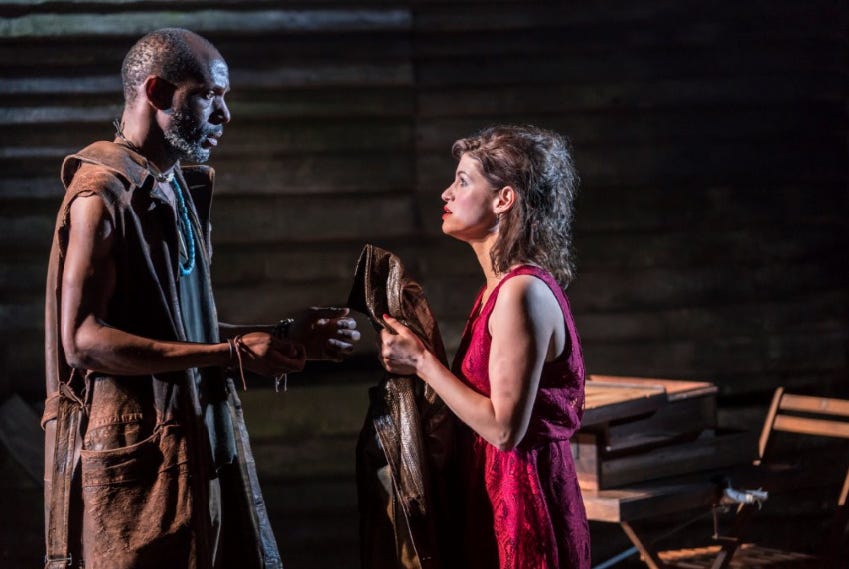
There’s some debate about whether Orpheus “sang” in the way we think of it today, or if he strummed the lyre while he recited poetry. That he never actually existed doesn’t seem to figure into the argument. I tend to believe he recited.
I have a young friend who’s also a writer. Sometimes I’ll dissect what I write so she can see what I did and how. One day, she’ll be famous. I’m convinced. We’ve been talking about how Orpheus is a repeating theme in my life, particularly in theatre.
Orpheus used his words to save the one he loved. I think that resonates with me because I’ve been doing just that for decades. Not just words, though, a fair amount of money and time was spent too, but mostly what I invested was pieces of my life.
In the myth, Orpheus led Eurydice out of hell to the gate leading to the living world, and then he lost her. That’s happened to me, over and over. Sometimes they’ll say, “Thank you for helping me.” But, usually not. Once they see the sunlight again, they’re gone.
I realize that changes a significant detail from the myth, but the Greeks dearly loved a hopeless tragedy. In my stories, there’s always one person who gets free.
Early on, I got involved with someone who had suffered most of her life. In college, I’d take her to the Mayflower for comeback sauce and pie so she didn’t have to be desperately sad in the dorms. In the depths of her agony, I said, “Look, we can get engaged if that will help.”
“I’d like that.” She said, and I got a ring. Months later, she said, “I can’t do this.” And gave the ring back. To be fair, I couldn’t do it either, but I was willing to pretend if it’d make her not so sad all the time. There was no mutual sharing of energy. It went just one way, and I condoned it, and I participated willingly in it.
I rationalized it by saying this was my gentlemanly duty, and things would be better for me once she recovered from this melancholy. That wasn’t to happen. Sometimes Orpheus went into hell, and nobody came out.
I’m too old to change now. When people enjoy my work, now that I’m actually allowing anyone to see it, that returns energy to me in ways you can’t imagine.
I never asked to be surrounded by this much tragedy. There are two theories; one is that I’m paying for sins in another life. I don’t think I believe that one. The other theory suggests that the creator puts elements in the path of tragedy that might dull its impact. I think I’ve done that, or at least I’ve tried.
Orpheus never really saved anyone, but he got close.