

Title Insurance
who really owns land

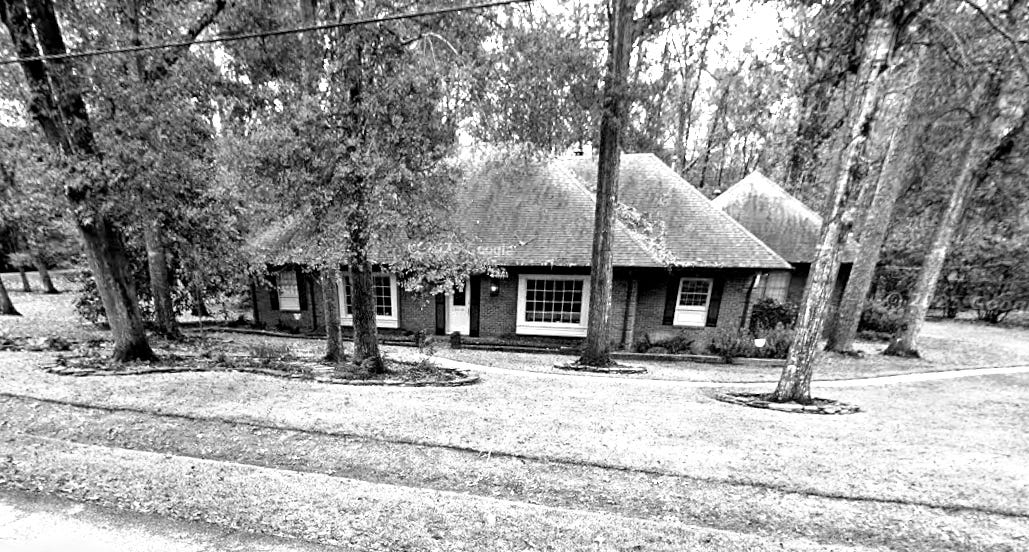
I didn’t grow up in Eastover; I grew up in Honeysuckle, which was Trustmark’s answer to Eastover. Like most things in the Great Mississippi Banking Wars, an outsider wouldn’t be able to tell the difference, or care. Mayor Speed and DGB built Eastover in the late fifties. Trustmark folks built Honeysuckle in the late sixties. I think they wanted to see how the Eastover thing worked before spending any money. DGB taking risks and Trustmark holding back is a big part of Mississippi history.
You could, and we often did, pass a Football between Eastover and Honeysuckle. As far as I can tell, the Angel only visited our house twice, although she visited the reservoir house and Raymond Farm more. The first visit happened because Momma put on a boy/girl dance party in the den, about a year and three-quarters after the Angel said I would have to dance with her, or she wouldn’t leave me alone.
A girl came with my friend Sarah, whom I didn’t know. Demanding that I slow dance with her, she decided to clean my tonsils with her tongue, which would be fine, except I didn’t know her name. We dated for about a year, which turned out to be kind of rough because I was the one to find her father’s body.
The second visit came when my mother conspired with Maria and Mary Carol to have a KA, Chi Omega reception when it looked like I might actually graduate from college. Like a lot of people, Maria called me just “B” and still does. She looked a lot like the Angel, but talked more. They both tried to take care of me, which I generally resisted.
Daddy’s best friend was a man named Rowan Taylor. Like how Daddy inherited Mississippi School Supply from his family, Rowan inherited Mississippi Valley Title from his. Since “Valley Title” doesn’t explain what Rowan actually did, Daddy explained what title insurance was and why it was important. I was confused. Didn’t you just buy land and that was that? I asked Daddy how often people actually needed insurance to protect their deeds.
“Often enough for Ro to have a house in Eastover” was his reply. The Taylors had a beautiful mid-century modern house in the part of Eastover that didn’t flood, amongst a bunch of guys who paid a bunch of money to build houses that invoke some sort of antebellum connection, whether it was real or not.
All sides of my family had antebellum connections, though we were mostly dirt farmers. Cap Campbell had a corn farm and a steam-powered sawmill, despite having only one arm. He sent six children to college, mostly Millsaps. One child died trying to drive wounded soldiers to the hospital as the Germans advanced over France. The Germans argued that they were the rightful owners of the land. The French, the English, and the Americans had other ideas. It’s a shame nobody had the foresight to get title insurance, which might have settled it. My Uncle Robert’s body was never returned to Mississippi. My uncle Boyd bought a tombstone to match his own and their mother’s. In Hesterville, Mississippi, there’s a tombstone with no body. He sleeps in France.
A friend wanted advice on finding an attorney for a friend who was having trouble because his entire family was at war over who got the land after MeeMaw died. It’s not even very much land, but there’s a strong desire not to let any of the cousins or siblings screw each other over so long as they come out on top. No amount of Title Insurance will help heal the ruined familial connections, all over an eighty-year-old house in an even older neighborhood in Mississippi.
I saw a video of Ted Cruz berating a Netflix executive in Senate hearings. “At the Emmy Awards, several musicians said, ‘No one is illegal on stolen land.” Do you believe this to be true?”
Now, Netflix was nominated for a few Emmy awards, but the event itself is run by CBS. The Netflix executive said, “I’m an accountant. I’m not really qualified to have an opinion on this subject.”
It’s no secret that I’m not a huge fan of Boomer or Generation Jones politicians. Somewhere along the way, we lost the metal in our spine. No party is more guilty of this than the other. I’m hoping Little Bird’s generation will save us.
I’m not a fan of James Carville because he’s such a Machiavellian son of a bitch, and they can’t be trusted. He’s often right, though, as was the Italian philosopher. On this issue, we see eye-to-eye in both parties. Ronald Reagan said, “Thou shalt not speak ill of another Republican.” Going into the next election cycle, these guys are already tearing each other apart, even if they’re not running for the same position. Why they would attack each other instead of the opposition isn’t something I understand very well.
More to the point, though, are the musicians at the Grammys right? Is this stolen land? Well, yeah. Of course, America is stolen land. All land is stolen land. We’re a country of people who came here often because our land was stolen, where we were, and there was so much land in North America, we figured we’d be safe, only we weren’t.
The question becomes: in the tumultuous history of the land on this planet, when do you stick a pin in the timeline and say, “This is who owns this land!” and have it stay. Israel, which didn’t exist when the twentieth century started, is now in a blood feud over who owns that land, them, Palestine, or Lebanon. Jordan, which was given the land by the Turks and had their ownership affirmed at the end of World War I, doesn’t seem to care as long as nobody bothers them.
In the novel, Absalom, Absalom!, William Faulkner describes how the hundred-mile tract of land that came to be known as “Sutpen’s Hundred” came to be. Originally, the land belonged to the Chickasaw, who stole it from two tribes Faulkner made up. After that, the French and the Spanish took turns stealing it from each other, until Thomas Sutpen arrived with some Africans he had acquired under suspicious circumstances in the Indies, and established Sutpin’s Hundred, dragging along a French architect to build him a palace befitting the man he hoped to become. As a child, Sutpin felt embarrassed by a black house-servant who didn’t recognize his superiority, so he traveled to the West Indies to make a great man of himself.
Despite all the people the land had been stolen from before, and the terrible things Sutpen did to acquire it, the novel traces the slow but steady declevity of the Sutpen Hundred and the Sutpen family, as acre after acre is either sold off or lost, until all that’s left in the old house is Jim Bon, the mixed race, mentally handicapped, great grandson of Sutpen, as the house itself burns down.
So much for one man’s dream to acquire and hold on to his land. When Faulkner was alive, he was surrounded by the real-life stories of Mississippi families slowly losing their lands and their homes, as Mississippi itself, once the richest place in America, began to rot. It’d be fifty years before Mississippi would turn things around and become part of the “New South.” I worry every day about how much of those gains we can retain. Human life, it seems, is a regular cycle of loss and growth. Nothing is ever settled. Nothing is ever truly “owned.” Even the people who steal don’t own what they stole. Ownership is a human construct. It exists because we say it exists and continues to exist as long as we can defend it, which is never as long as we think.
Musicians who want to throw around catchphrases like “no one is illegal on stolen land” annoy me because it assumes the land wasn’t already stolen when we stole it, and will be stolen by somebody else in the future. You can’t stop history and say, “This is who owns this!” It just doesn’t work that way. That’s why people pay so much for Title Insurance.
boyd, the only problem i found with title insurance in 40+ years was all the lawyers and crooks that flock to the trough! query: is that redundant? 🤣🇺🇸🏴☠️)